Centrios Design Syst.
Product/Platform: Centrios
My Role: Product Designer, Experience Strategy
Team: Engineering Manager, Product Manager, Business Analyst, Developers, UX/UI Designer
Year: 2024 - Present
Overview
When I joined the Centrios team, I spent time studying the product across web and mobile to understand how the system worked end-to-end. During this process, I noticed increasing inconsistencies in the UI, patterns, interactions, and visual language across the platforms. As the product continued to evolve, these inconsistencies risked slowing development and creating fragmented user experiences.
Identifying this early, I championed the creation of a Centrios Design System to serve as a single source of truth for design decisions and product consistency.
Structural UX Challenges -
-
Inconsistent UI patterns across web and mobile
-
No centralized design standards or reusable components
-
Repeated design and engineering effort for similar UI patterns
-
Difficulty maintaining visual and interaction consistency as new features shipped
While the need for a design system was clear, feature delivery priorities often took precedence, delaying formal implementation.
My Role
As the Lead UX/UI Designer, I saw an opportunity to apply systems-thinking approach connecting users, devices, and access management into one cohesive ecosystem. By driving a unified UX strategy focused on clarity, scalability, and usability, we began to boost adoption, improve retention, and support sales growth through a more seamless and trustworthy experience across platforms.
My responsibilities included:
-
Auditing existing UI components and interaction patterns
-
Identifying inconsistencies across platforms
-
Defining foundational principles for system scalability
-
Proposing reusable component structures
-
Socializing the system concept with product and engineering teams
Because the system has not yet been prioritized for full implementation, I focused on introducing system thinking into active feature work while building the groundwork for future adoption.
Impact So Far
Although the design system is not yet implemented, this work helped:
-
Establish a shared understanding of consistency gaps across the product
-
Create a roadmap for scalable UI patterns
-
Introduce the concept of a centralized design source of truth
-
Lay the foundation for more efficient product development as Centrios grows
Foundation


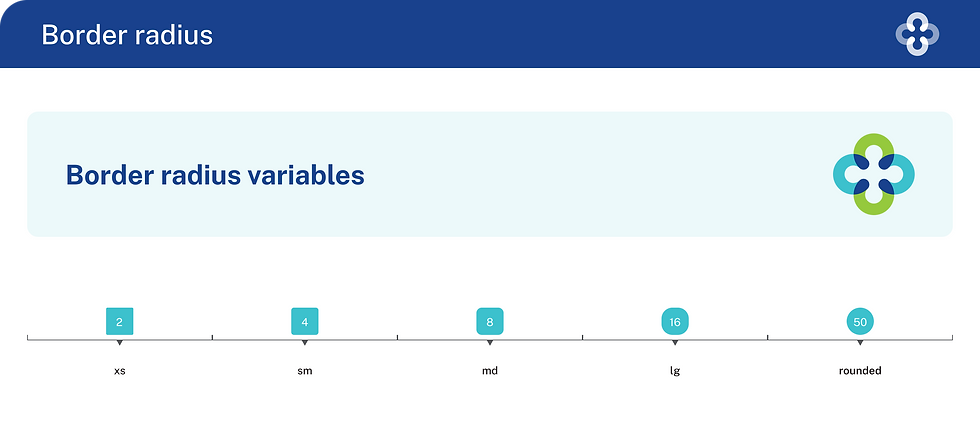


Components


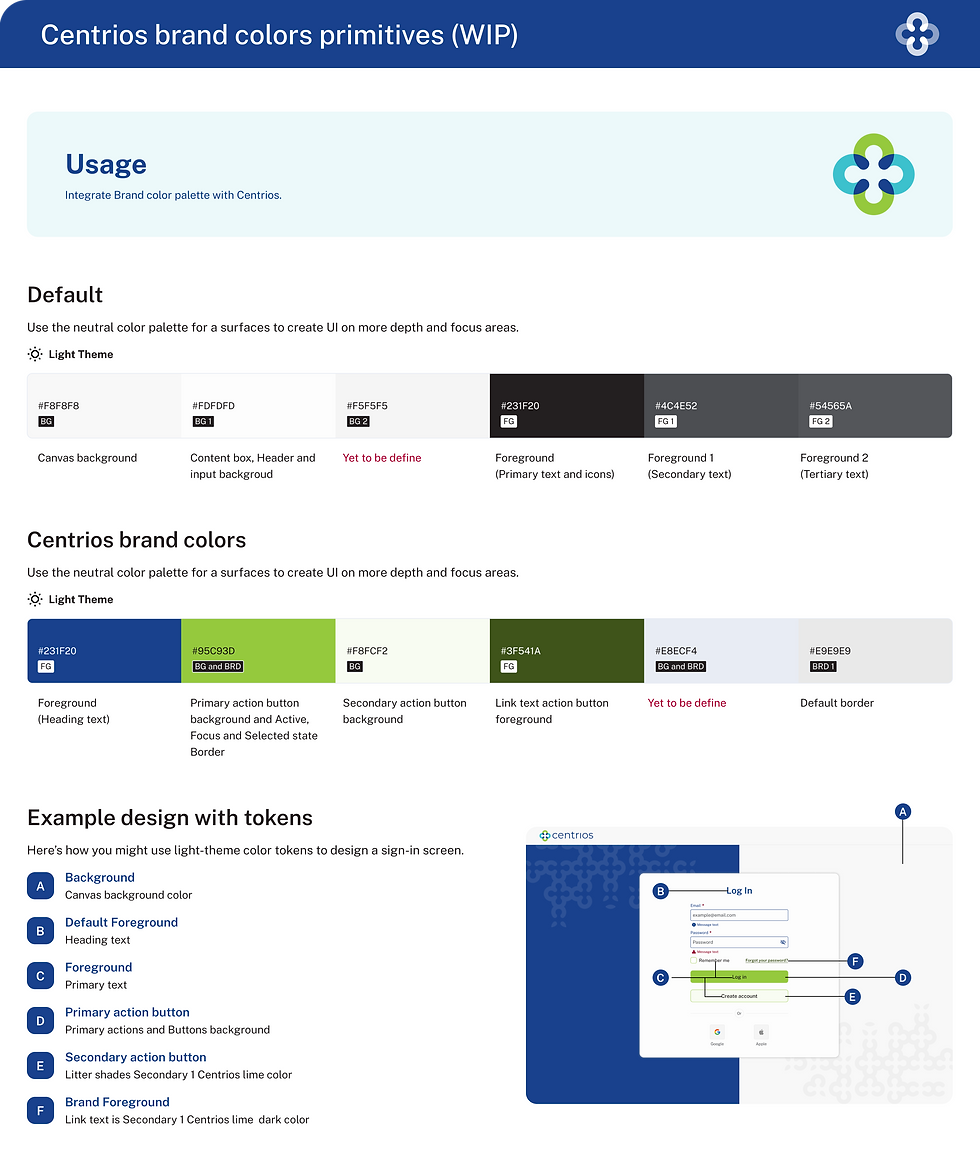
Documentation




Reflections
Strategic Value ≠ Immediate Priority
The Centrios Design System consistently fell behind feature work in prioritization, despite clear data supporting its long-term efficiency and consistency benefits. Critical product issues took precedence, reinforcing that value alone doesn’t determine roadmap position.
Influence Through Incremental Integration
Instead of waiting for full adoption, I embedded system principles where possible — improving consistency within active features and aligning standards with immediate business needs. Progress became incremental, not dependent on a single green light.
Alignment Over Advocacy
Advocating with numbers was necessary, but not sufficient. Design systems gain traction when tightly aligned with product goals, engineering bandwidth, and timing.
Sustainable system adoption requires strategic alignment, not just strong rationale.